
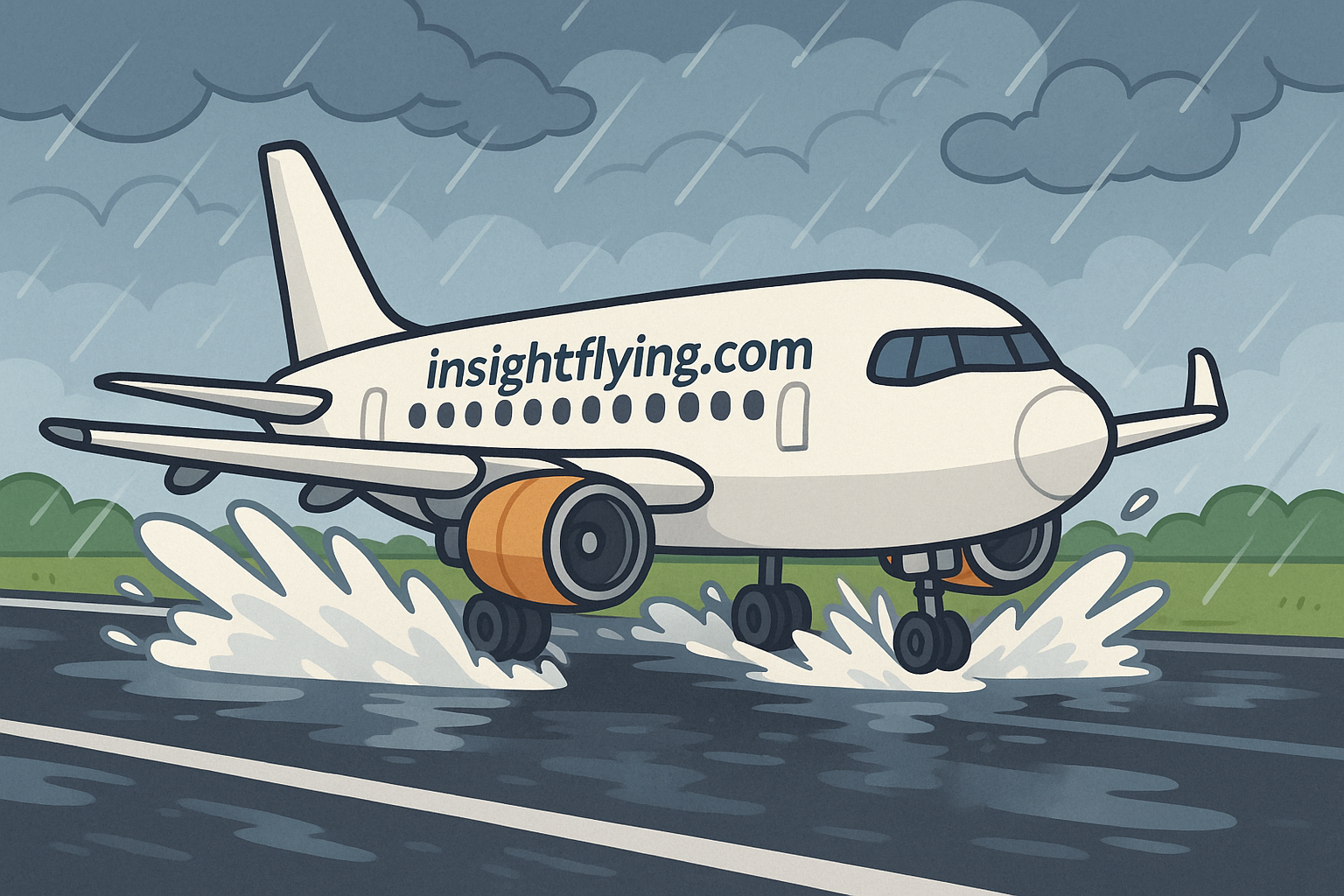
การลงจอดในสภาพที่มี ลมข้าง ลมขวาง (Crosswind) ถือเป็นหนึ่งในความท้าทายของนักบิน เพราะแรงลมที่พัดเข้ามาในมุมเฉียงกับแนวรันเวย์ จะทำให้เครื่องบินมีแนวโน้มเบี่ยงออกจาก Centerline หากนักบินไม่แก้ไขทิศทางให้เหมาะสม
Landing in crosswind conditions is one of the most challenging tasks for pilots. A crosswind—wind blowing at an angle across the runway—naturally pushes the aircraft away from the centerline if not corrected properly.
นักบินมีเทคนิคหลัก ๆ อยู่ 2 แบบในการรับมือกับลมข้าง ได้แก่ Crab Method และ Wing Low (Sideslip) Method ซึ่งแต่ละแบบมีข้อดีข้อจำกัดที่ต่างกัน
Pilots mainly use two techniques to handle crosswinds: the Crab Method and the Wing Low (Sideslip) Method. Each has its own advantages and limitations.
Crab Method คือการที่เครื่องบินหันหัวเข้าหาลมเล็กน้อย เพื่อให้แนวการบินตรงกับ Centerline ของรันเวย์ เมื่อใกล้จะสัมผัสพื้น นักบินจะทำการ “De-crab” หรือบิดหัวเครื่องกลับมาให้ตรงกับแนวรันเวย์ก่อนแตะพื้น
In the Crab Method, the aircraft’s nose is pointed slightly into the wind, so the actual ground track remains aligned with the runway centerline. Just before touchdown, the pilot “de-crabs,” aligning the nose with the runway for a smooth landing.
Wing Low (Sideslip Method) คือการเอียงปีกด้านที่ลมพัดเข้าหาให้ต่ำลงเล็กน้อย แล้วใช้ Rudder ควบคุมหัวเครื่องให้ตรงกับรันเวย์ วิธีนี้ทำให้ล้อด้าน Upwind สัมผัสพื้นก่อน เพิ่มเสถียรภาพในการควบคุมหลัง Touchdown
In the Wing Low (Sideslip) Method, the pilot lowers the upwind wing slightly and applies opposite rudder to keep the nose aligned with the runway. This allows the upwind wheel to touch down first, providing better control after touchdown.
สำหรับเครื่องบินพาณิชย์ที่มีน้ำหนักมาก ส่วนใหญ่จะใช้วิธี Crab + De-crab เพราะช่วยลดแรงบิดต่อ Landing Gear แต่ในบางสถานการณ์ นักบินก็อาจผสมกับ Wing Low ตามสภาพลมและลักษณะเครื่องบิน
For heavy commercial airliners, the Crab + De-crab technique is commonly used, as it reduces stress on the landing gear. However, pilots may combine it with the Wing Low method depending on wind conditions and aircraft type.
สิ่งที่สำคัญที่สุดในการลงจอดลมข้าง คือ การรักษา Centerline และเสถียรภาพของเครื่องบินจนหยุดสนิท เพราะแม้จะลงจอดได้ แต่ถ้าเครื่องบินเบี่ยงออกนอกแนวเพียงเล็กน้อย ก็อาจนำไปสู่อุบัติเหตุร้ายแรงได้
The most critical factor in crosswind landings is maintaining centerline and stability until the aircraft comes to a complete stop. Even a slight deviation after touchdown can result in a runway excursion or serious incident.
🔗 Reference Links
- FAA Airplane Flying Handbook – Crosswind Approach and Landing
https://www.faa.gov/regulations_policies/handbooks_manuals/aviation/airplane_handbook - Skybrary: Crosswind Landing Techniques
https://skybrary.aero/articles/crosswind-landing-techniques

ลองดู JIAPU 21V พัดลมไร้สาย 12 นิ้ว พัดลมแบต ไฟ LED ไร้สาย พัดลม พัดลมพกพาไร้สาย พัดลมแคมป์ปิ้ง ในราคา ฿948 – ฿1,482 ที่ Shopee https://s.shopee.co.th/6fg7tStt9R
เครื่องกรองน้ำ COWAY ลดราคาพิเศษ
 |
|
หนังสือการบิน ทางลัดสู่ความเข้าใจที่นำไปใช้งานจริง


 |
|
 |
|
 |
|
787 A350 accident Airbus aircraft airmanship airworthiness aviation Aviation SMS B787 become a captain become a pilot Boeing captain CAT Crisis emergency engine fatigue flight safety FRMS go-around Indigo interview pilot qualified pilot safety Safety Management System SMS student pilot swiss cheese tail strike TCAS technology training travel tips turbulence weather การจัดการความปลอดภัย การบิน การสอบสัมภาษณ์ ความปลอดภัย นักบิน สอบนักบิน เรียนจากข่าว
787 A350 accident Airbus aircraft airmanship airworthiness aviation Aviation SMS B787 become a captain become a pilot Boeing captain CAT Crisis emergency engine fatigue flight safety FRMS go-around Indigo interview pilot qualified pilot safety Safety Management System SMS student pilot swiss cheese tail strike TCAS technology training travel tips turbulence weather การจัดการความปลอดภัย การบิน การสอบสัมภาษณ์ ความปลอดภัย นักบิน สอบนักบิน เรียนจากข่าว





Pingback:Winter Operations, The Risks & Operation Safety - Insight Flying