นักบินพาณิชย์ทุกคนจะได้รับอนุญาตให้บินได้ ทีละหนึ่งแบบ (Aircraft Type Rating) ยกเว้นในกรณีที่เครื่องบินรุ่นนั้น ๆ อยู่ใน ตระกูลเดียวกัน (Common Type Rating) หรือมีระบบที่คล้ายคลึงกันจนสามารถใช้ความรู้และทักษะร่วมกันได้
1. ทำไมนักบินไม่สามารถบินได้หลายแบบพร้อมกัน?
นักบินที่บิน Boeing 747-400 ไม่สามารถสลับไปบิน Airbus A380 ได้ทันที เพราะทั้งสองรุ่นใช้ระบบและหลักการทำงานที่แตกต่างกันโดยสิ้นเชิง แต่หากเป็น B747 กับ B777 หรือ A330 กับ A350 นักบินสามารถได้รับอนุญาตให้บินทั้งสองแบบได้ หากผ่านการฝึกอบรมและการสอบตามที่หน่วยงานกำกับดูแลกำหนด


2. Common Type Rating คืออะไร?
ผู้ผลิตเครื่องบินพยายามออกแบบ ห้องนักบิน (Cockpit Layout) ให้มีความใกล้เคียงกัน เช่น ตำแหน่งปุ่ม การทำงานของระบบ และตรรกะของการควบคุม เพื่อให้เกิดสิ่งที่เรียกว่า Common Type Rating หรือ Mixed Fleet Flying (MFF) ซึ่งทำให้นักบินกลุ่มเดียวกันสามารถบินได้หลายรุ่น
ตัวอย่าง:
- Boeing: B747-400, B777, B787
- Airbus: A320, A330, A340, A350, A380
แต่การอนุมัติต้องผ่านการตรวจสอบและรับรองจากหน่วยงานกำกับดูแล เช่น FAA (อเมริกา), EASA (ยุโรป) หรือ กพท. (ไทย) เสมอ
3. ทำไมสายการบินไม่นิยมให้บินหลายแบบ?
แม้กฎจะอนุญาต แต่ในทางปฏิบัติ สายการบินส่วนใหญ่มักเลือกให้นักบินบินเพียงแบบเดียว เนื่องจาก:
- ต้องฝึกและสอบบ่อยขึ้น (Training & Checking Burden)
- ต้องรักษาความต่อเนื่องการบินของแต่ละแบบ (License Recency)
- การคุ้นเคยกับระบบอาจลดลงหากต้องสลับไปมา
ดังนั้น หากมีนักบินเพียงพอ การจัดให้นักบินบินเครื่องแบบเดียวจะช่วยให้เกิดความชำนาญมากกว่า
4. ปัจจัยความปลอดภัยที่แท้จริง
แม้การเปลี่ยนแบบเครื่องบินจะเป็นเรื่องสำคัญ แต่ ความปลอดภัยของการบิน ไม่ได้ขึ้นอยู่กับว่าเครื่องบินใหม่หรือเก่าเพียงอย่างเดียว เครื่องบินเก่าก็มีการซ่อมบำรุงตามมาตรฐานสากล ขณะที่เครื่องบินใหม่อาจมีความน่าเชื่อถือสูงขึ้น แต่สิ่งที่สำคัญที่สุดคือ:
- Basic Flying Skills (ทักษะการบินพื้นฐาน)
- Aircraft Performance & Limitations
- Weight & Balance
- การจัดการเหตุผิดปกติ (Abnormal & Emergency Situations)
เพราะหากนักบินพึ่งพาระบบอัตโนมัติมากเกินไปโดยไม่เข้าใจหลักการบินจริง ๆ จะเกิดสิ่งที่เรียกว่า Automation Syndrome ซึ่งอาจทำให้ไม่รู้ทันเมื่อระบบทำงานผิดพลาด และนำไปสู่เหตุการณ์ร้ายแรงได้
✅ สรุป
การเปลี่ยนแบบเครื่องบิน (Type Transition) เป็นขั้นตอนที่ซับซ้อนและต้องอาศัยทั้งการฝึกอบรม การตรวจสอบ และการรับรองจากหน่วยงานกำกับดูแล แต่ไม่ว่าจะบินเครื่องรุ่นไหน สิ่งสำคัญที่สุดที่ทำให้เที่ยวบินปลอดภัยคือ นักบินที่มีความรู้ ความเข้าใจ และทักษะการตัดสินใจที่ถูกต้องในทุกสถานการณ์
Aircraft Type Transition for Commercial Pilots
Commercial pilots are certified to fly one aircraft type at a time (Type Rating). The exception is when two or more aircraft types belong to the same family or share a high degree of similarity in systems and cockpit design. In such cases, pilots may be authorized to fly multiple types, provided they undergo additional training and meet regulatory requirements.
1. Why can’t pilots fly multiple types simultaneously?
A pilot certified on the Boeing 747-400 cannot simply switch to the Airbus A380 because the systems, cockpit layout, and operating philosophy are entirely different.
However, a pilot qualified on the B747 may transition to the B777, or from the A330 to the A350, after completing supplementary training and obtaining approval from the aviation authority.
2. What is a Common Type Rating?
Aircraft manufacturers, such as Boeing and Airbus, design their cockpit layouts with a high level of commonality—similar switch positions, system logic, and operating procedures. This allows for Common Type Ratings or Mixed Fleet Flying (MFF), where the same group of pilots can operate multiple aircraft models.
Examples include:
- Boeing: B747-400, B777, B787
- Airbus: A320, A330, A340, A350, A380
Nevertheless, this requires regulatory approval from authorities such as the FAA, EASA, or CAAT (Thailand) to ensure safety standards are met.
3. Why do airlines rarely allow pilots to fly multiple types?
Although regulations permit it, most airlines prefer pilots to operate a single aircraft type. The reasons include:
- Additional training and checking requirements
- Maintaining license recency for each type
- Reduced familiarity when switching between aircraft
For these reasons, airlines often assign one type per pilot group to maintain maximum proficiency and operational safety.
หนังสือ A Pilot Books ในรูปแบบ eBook ที่ MebMarket
สร้างแรงบันดาลใจ…..เริ่มเมื่อไหร่
 |
|
 |
|
 |
|
 |
|
 |
|
4. The real factor behind flight safety
While type transitions are important, flight safety does not depend solely on whether the aircraft is new or old. Older aircraft undergo strict maintenance schedules, while newer aircraft may offer greater reliability. Ultimately, the decisive factor is the pilot’s knowledge, skills, and judgment.
Key competencies include:
- Basic Flying Skills
- Aircraft Performance & Limitations
- Weight & Balance
- Handling Abnormal and Emergency Situations
Overreliance on automation can create what is known as the Automation Syndrome—when pilots fail to recognize system malfunctions because they trust automation blindly. This can lead to critical safety risks if not properly managed.
✅ Conclusion
Aircraft type transition is a structured process that involves training, checking, and regulatory approval. However, regardless of the aircraft model, the foundation of flight safety lies in the pilot’s knowledge, skills, and experience. Technology can support, but only well-prepared pilots can ensure that every flight reaches its destination safely.
-
เวียตนามแอร์ไลน์ B787 Late rotation, tail strike, overran
สายการบิน Vietnam Airlines ใช้เครื่องบิน Boeing 787-9 ทะเบียน VN-A867 ปฏิบัติการเที่ยวบิน VN-34 จากเมืองมิวนิก ประเทศเยอรมนี ไปยังกรุงฮานอย ประเทศเวียดนาม ขณะเครื่องบินกำลังวิ่งขึ้นจาก รันเวย์ 26L ของสนามบินมิวนิก เครื่องบินมีการ Rotate ช้ากว่าปกติอย่างมาก และเมื่อเครื่องบินยกตัวขึ้นจากพื้น ได้เกิดกลุ่มฝุ่นและเศษดินจำนวนมากฟุ้งกระจายขึ้นมา โดยคาดว่า ส่วนหางของเครื่องบิน (tail) ได้กระแทกกับพื้นรันเวย์ (tail strike) หลังจากนั้นเครื่องบินไต่ระดับขึ้นไปที่ FL100 (Flight Level 100 หรือประมาณ 10,000 ฟุต) ก่อนที่ลูกเรือจะแจ้งว่าพบ ข้อบ่งชี้เกี่ยวกับแรงดันลมยาง (tyre pressure indication) และจำเป็นต้อง Dump Fuel หรือระบายน้ำมันเชื้อเพลิงทิ้ง เพื่อลดน้ำหนักเครื่องบินก่อนลงจอด ประมาณ 90 นาทีหลังออกเดินทาง เครื่องบินได้ทำ Low Approach เหนือรันเวย์ 26R…
-
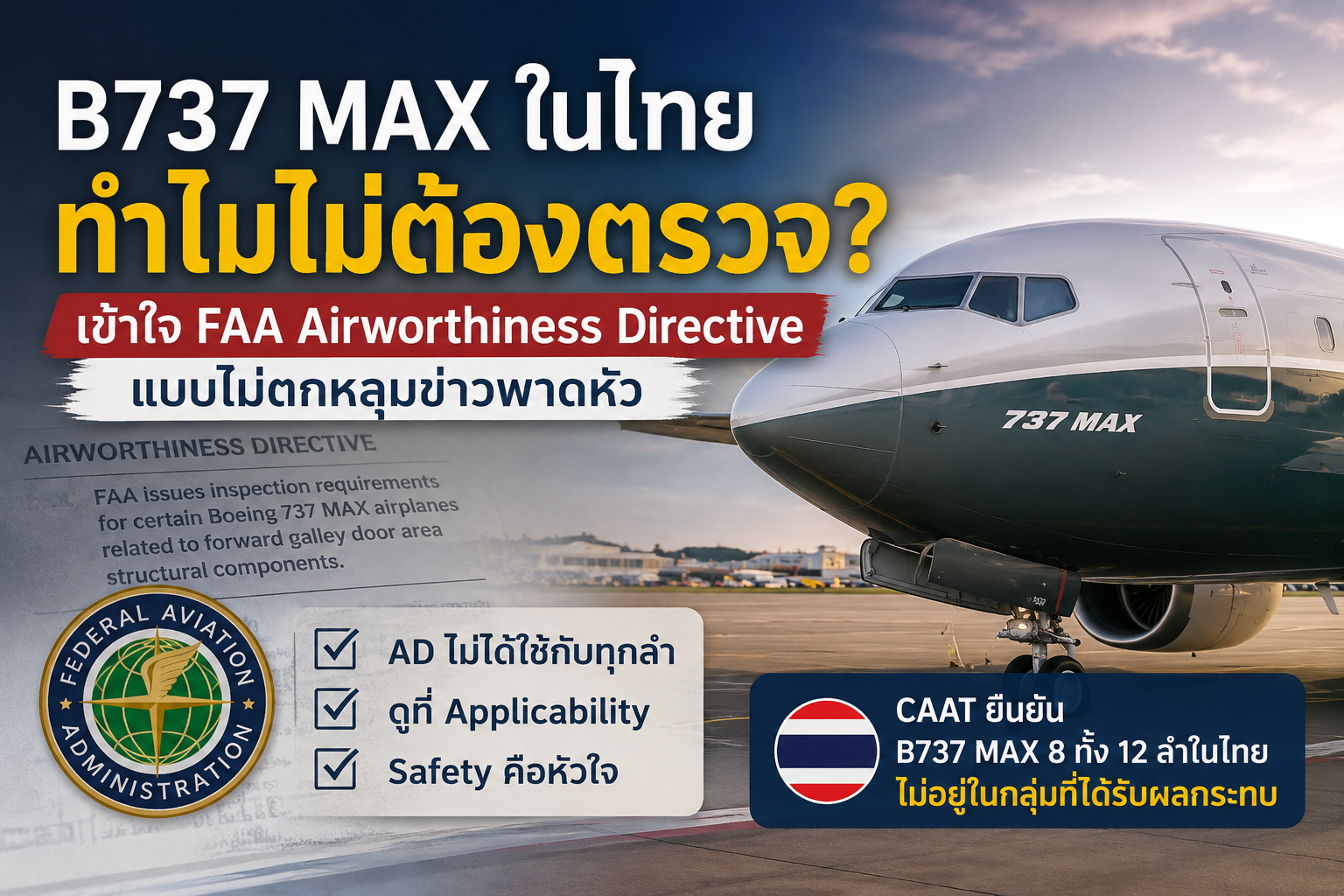
B737 MAX ในไทยทำไมไม่ต้องตรวจ?
เข้าใจ FAA Airworthiness Directive แบบไม่ตกหลุมข่าวพาดหัว โดย Capt. Sopon PhikanesuanCapt. Sopon Insights | insightflying.com ข่าวเกี่ยวกับ Boeing 737 MAX มักได้รับความสนใจจากสาธารณชนทันที โดยเฉพาะเมื่อมีคำว่า “FAA orders inspection”, “structural cracks” หรือ “fuselage inspection” ปรากฏอยู่ในพาดหัวข่าว คำถามที่ตามมาจึงเป็นเรื่องที่เข้าใจได้มากว่า ถ้า FAA สั่งตรวจ B737 MAX แล้วทำไมเครื่องบิน B737 MAX ที่ใช้งานอยู่ในประเทศไทยจึงไม่ต้องตรวจ? คำตอบสั้น ๆ คือ เพราะ Airworthiness Directive ไม่ได้ใช้กับเครื่องบินทุกลำเพียงเพราะเป็น aircraft model เดียวกัน สิ่งที่ต้องพิจารณาคือ Applicability ของ AD และ configuration ของเครื่องบินแต่ละลำ…
-
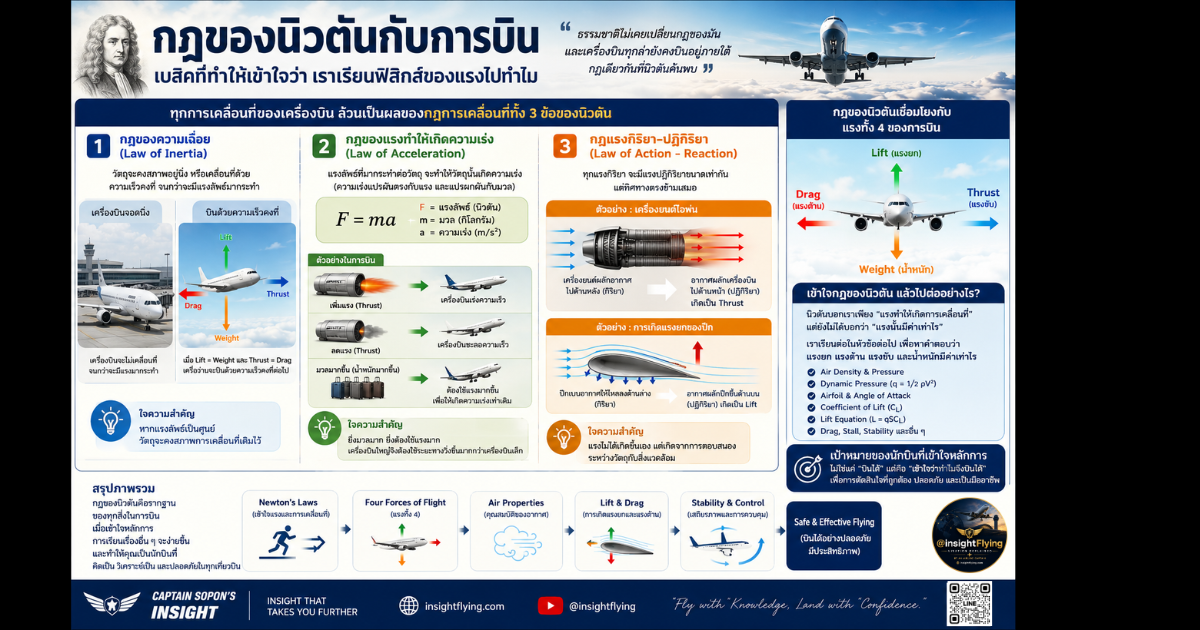
กฎของนิวตันกับการบิน
เบสิกที่ทำให้เข้าใจว่า เราเรียนฟิสิกส์ของแรงไปทำไม เมื่อเริ่มเรียนวิชา Principle of Flight หลายคนอาจรู้สึกว่าเนื้อหาเต็มไปด้วยสมการและหลักฟิสิกส์ที่ดูซับซ้อน ทั้ง Lift, Drag, Thrust, Weight, Angle of Attack, Bernoulli’s Principle, Newton’s Laws หรือ Dynamic Pressure คำถามที่มักเกิดขึ้นคือ “นักบินจำเป็นต้องรู้เรื่องพวกนี้จริงหรือ?” คำตอบคือ… จำเป็นมาก เพราะทุกครั้งที่เครื่องบินเคลื่อนที่ ทุกครั้งที่เราดันคันเร่ง ดึงหรือดันคันบังคับ ทุกสิ่งที่เกิดขึ้นล้วนเป็นผลของกฎฟิสิกส์ โดยเฉพาะ กฎการเคลื่อนที่ของเซอร์ไอแซก นิวตัน (Newton’s Laws of Motion) กล่าวได้ว่า หากไม่มี Newton ก็ไม่มีวิชา Principle of Flight อย่างที่เราเรียนกันในปัจจุบัน ก่อนจะเข้าใจ Lift ต้องเข้าใจ “แรง” หลายคนเริ่มเรียนการบินจากการท่องจำว่า แต่แท้จริงแล้ว… แรงทั้งสี่นี้ล้วนปฏิบัติตามกฎของนิวตันทั้งหมด เมื่อเข้าใจ Newton แล้ว…